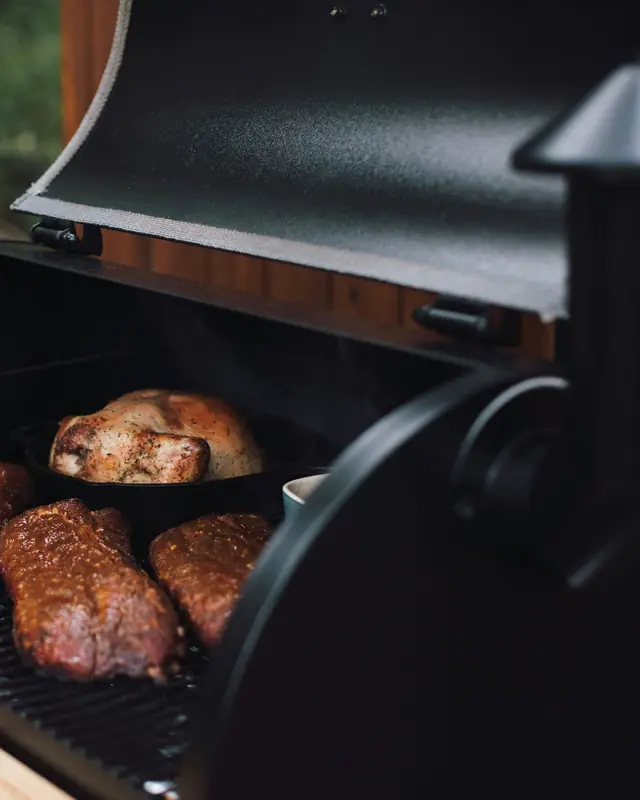
How to choose the right pellet grill
Pellet grills look alike from across the yard. These six specs separate them. If you are new to them, our guide how pellet grills work explains every part, and pellet grill vs gas grill helps if you are still deciding on fuel.
Temperature control
Check the controller type in the spec table. Makers label their controllers as PID, digital or multi-position; a PID controller is designed to adjust the pellet feed continuously to stay close to the set point, while simpler controllers run on fixed timing. Also check the listed temperature range: for low-and-slow cooking, USDA guidance is to keep the smoker's air temperature between 225 and 300°F for the whole cook (USDA FSIS), so the bottom of the range matters as much as the top.
Primary cooking area
Compare primary cooking area, not total. Total area includes upper warming racks that sit farther from the heat. Think about your largest cook: a whole packer brisket, several racks of ribs or a turkey. If the primary grate cannot hold it flat, the total figure will not help.
Hopper capacity
The hopper holds the pellets the auger feeds to the fire. Pellet use varies by model, weather and temperature, so we take burn figures only from the maker's own manual, never from estimates. A larger hopper matters most for long, unattended cooks; a small hopper is fine for weeknight grilling and is part of what keeps portable models light.
Build and insulation
Look at body material, lid fit and whether the maker sells an insulation blanket for the model. Read what the manual says about rain and outdoor storage too. Traeger, for example, states its grill is protected from water spray less than 60 degrees from vertical (Traeger), which is a spec, not a promise of weatherproofing. A cover is cheap insurance.
Wi-Fi and app control
Wi-Fi models let you change the temperature and read meat probes from your phone. Check whether the app needs an account or a subscription, whether the grill still works fully from its own control panel, and the maker's stated range for Bluetooth-only models. If you already own a wireless thermometer, you may not need it built in.
Searing ability
Check the listed maximum temperature and whether the model has a direct-flame sear zone, a sear slide or a separate sear box. If you cook steaks and burgers as often as brisket, this criterion moves to the top of the list.