We compared manufacturer specs, manuals and warranty terms. We have not hands-on tested these products yet. How we research
We may earn a commission when you buy through links on this page. As an Amazon Associate I earn from qualifying purchases. How we make money
An outdoor griddle is a big, flat steel cooktop over gas burners. It does breakfast, smash burgers, fried rice and anything small enough to fall through a grill grate. The decisions are size, number of heat zones, how it handles grease and whether you need a lid. This guide is for cooks adding a flat top to the patio or the tailgate kit. Because it runs on gas, it follows the same placement and leak-check rules as a gas grill, which our gas grill guide covers in more detail.
We compared 4 outdoor griddles and picked 4.
Our picks at a glance
1
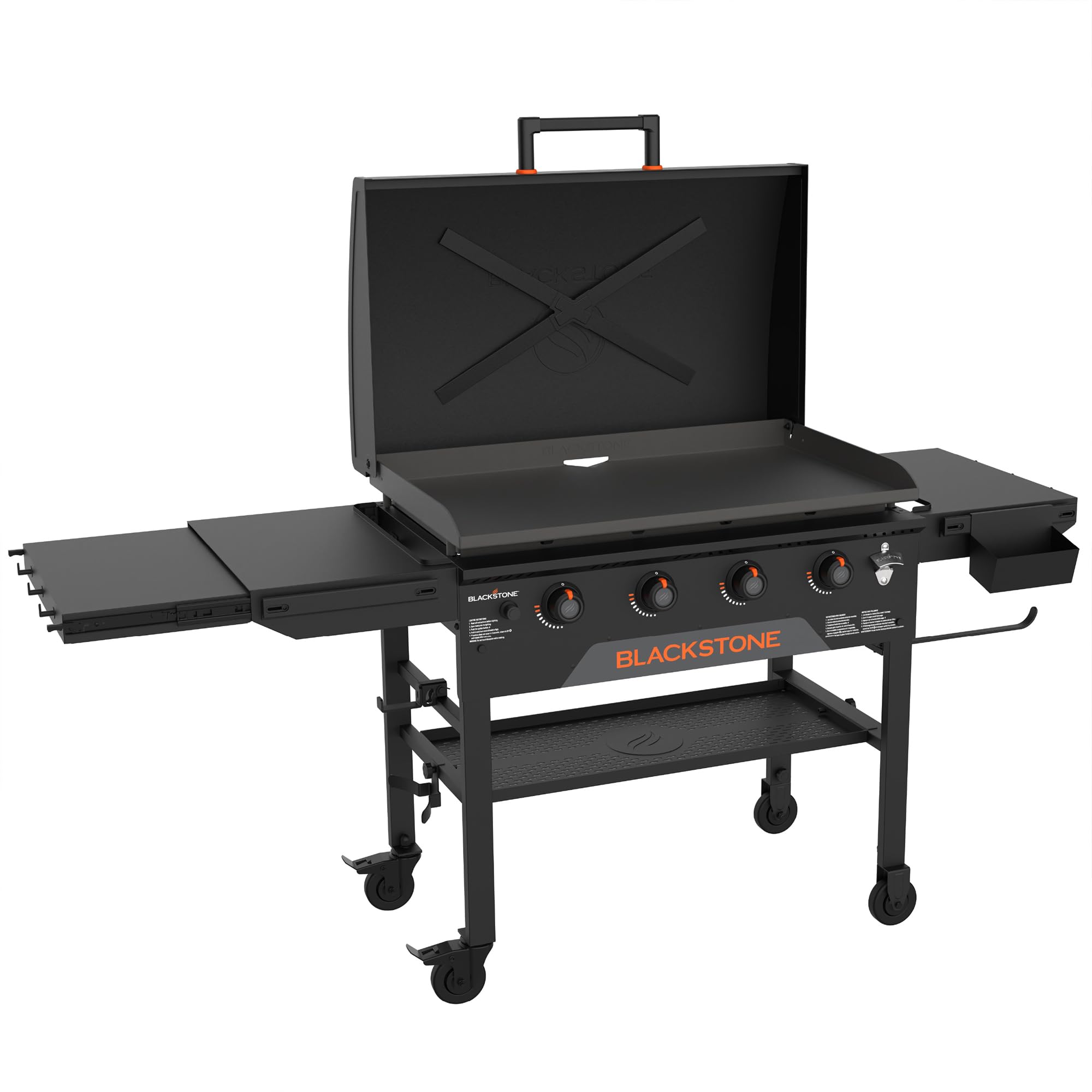
★ Start hereBest overallBlackstone 36" Omnivore Griddle with HoodFour burners under a 36-inch rolled-steel top give room for breakfast for a crowd, and the hood helps melt cheese and hold heat.
$499.00Price as of Nov 25, 2026, 7:51 PM ET. Details
Best portableBlackstone 22" Tabletop Griddle with HoodTwo burners and a 22-inch top on short legs that sit on a tailgate or camp table, with a hood for wind and melting.
$186.99Price as of Nov 24, 2026, 7:03 PM ET. Details
Best low-maintenance topPit Boss 3-Burner Ceramic-Coated GriddleA ceramic-coated cooktop skips most of the seasoning routine of bare rolled steel, for cooks who want easier cleanup.
Size first, then grease handling and the lid. Not sure you need a griddle at all? Read griddle vs grill.
Cooktop size and heat zones
Griddles are usually sold by width, from small tabletop models to 36-inch carts. Compare the listed cooking surface and burner count. Two burners give you a hot side and a cool side; four let you run several temperatures for a full breakfast. Measure the spot where it will sit before you compare widths, and leave room around the cart for prep space and for you to move.
Cooktop material and thickness
Most outdoor griddles use rolled carbon steel that needs seasoning, like cast iron. Some use stainless or coated plates that need less care. Check what the maker lists for material and plate thickness, and read the seasoning instructions in the manual before the first cook. Follow the maker's care instructions for seasoning and re-oiling, and dry the plate before you put a cover over it.
Grease management
Rear grease traps keep the front clear; front traps are easier to reach. Either way you will empty it often: NFPA lists removing grease and fat buildup from grills and trays as a fire-prevention step (NFPA via ANSI). Check how big the cup is and whether it takes disposable liners.
Lid or hood
A hinged hood keeps rain and debris off the seasoned surface. Without one, budget for a hard cover. If you plan to cook in wind, a hood also shields the flames.
Portable or cart model
Check the listed weight, whether the legs fold, and the fuel connection: tabletop models often run on small propane canisters, carts on a standard cylinder. For travel-first cooking, compare against our portable grill picks. Tabletop models need a flat, sturdy surface and the same clearance from the house as any gas grill.
Wind protection
Side wind guards and a rear hood help. Wherever you set it up, place it like any gas grill: well away from the house, railings, eaves and branches (NFPA via ANSI).
Tips for using your outdoor griddle
Run the soap-and-water test on the propane connection before the first cook each year (NFPA via CT.gov).
Never leave a lit griddle unattended (NFPA via ANSI).
Keep children and pets at least three feet from the cooking area (NFPA via ANSI).
Clean the plate with the tools the maker allows; our grill cleaning guide explains why grease buildup is a fire risk.
FAQ
Is a griddle safe to use on a covered porch?
Yes, if you follow gas-grill placement rules. Keep it far from the house, eaves and overhanging branches, as NFPA advises; its 2007-2011 data traced 29% of home grill structure fires to an exterior balcony or open porch (NFPA via CT.gov).
How do I check the propane connection?
Before the first cook each year, brush soapy water over the connection; bubbles mean gas is escaping (NFPA via CT.gov).
What internal temperatures should griddle burgers and chicken reach?
Ground beef and pork should reach 160°F, and poultry 165°F (FoodSafety.gov).
Do I need to clean grease after every cook?
Yes, it is a good habit. NFPA recommends clearing grease and fat from grills and trays, since built-up grease feeds fires (NFPA via ANSI).